
SendMyGold & SendMySilver
Three connected brands for selling gold and silver by post, nationwide.

All services / Tools & automation
Choosing the right tools, connecting the ones you already have, and automating the repetitive work that eats your week.

Most small teams lose hours every week to work a computer could do: copying details from one system to another, chasing the same information, building the same report every Monday.
We look at where the time actually goes, then fix the biggest drains first: choosing better tools where they help, connecting the ones you already have, and automating the rest. Everything is documented, so it doesn’t depend on anyone’s memory.
What it covers
How it works
Walk through how work actually happens today, including the workarounds.
Biggest time saving and lowest risk first.
Build, test with real data, and keep a human in the loop where it matters.
Clear notes on what runs, plus monitoring so problems surface early.
Related work
Three connected brands for selling gold and silver by post, nationwide.
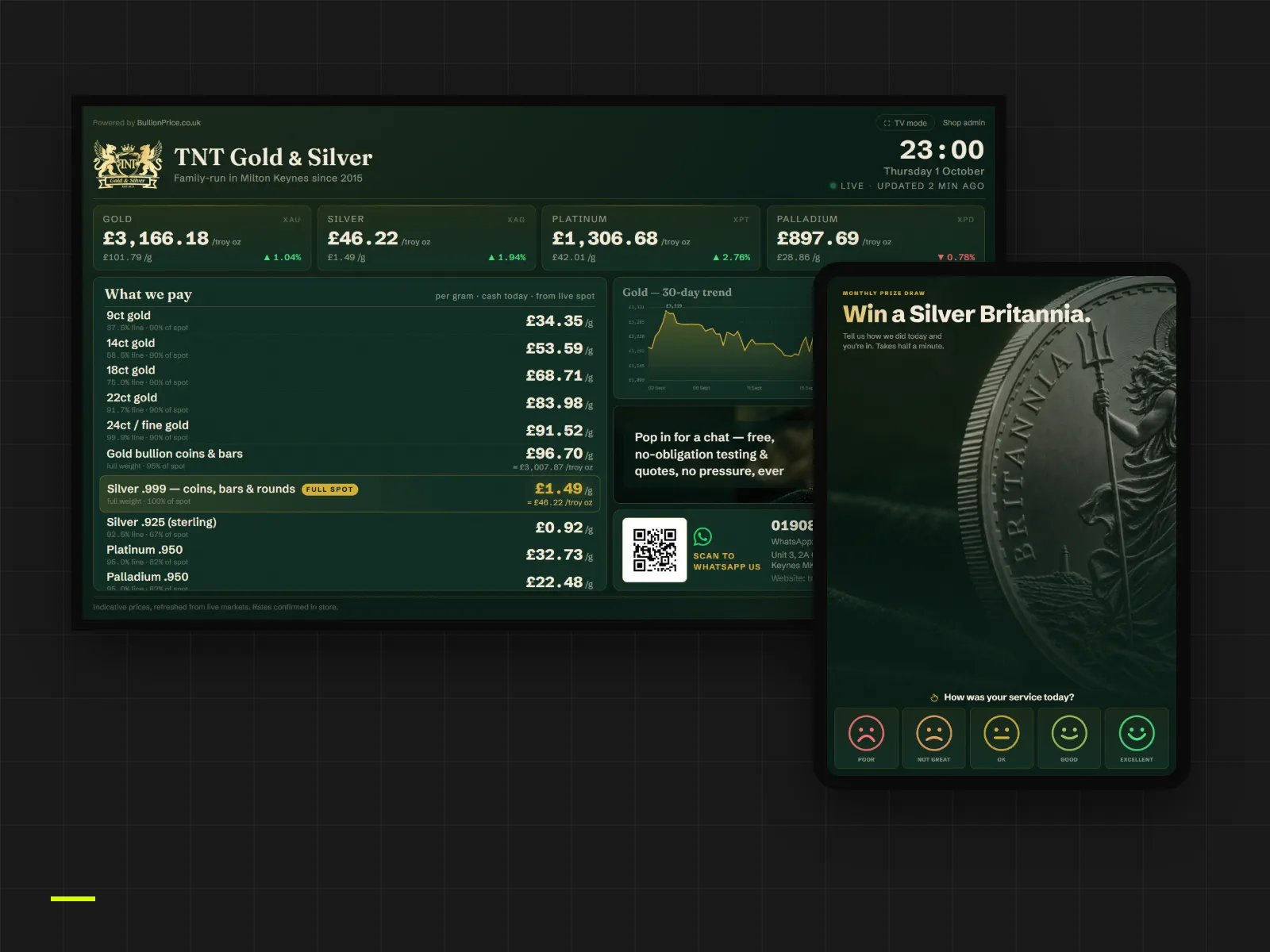
A live price board for the shop TV and a customer feedback kiosk for the counter.

Brand, website, cleaning management system and mobile app for a new local business.
Questions
Start with work that is frequent, rule-based and easy to get wrong by hand. Our note on what to automate first walks through how to choose.
Not always. Often the tools you already pay for can do more than you’re using them for, once they’re connected properly.
It can be, with the right tools and settings. We only use it where it clearly helps, and we’re careful about what data goes where.
Everything is documented and monitored, so problems are spotted early, and a person can always step in.
Next step
Tell us a little about what you have in mind. You’ll get a proper reply, usually with a few questions.